There are two types of cardiac arrest in adults, and children.
Primary Cardiorespiratory Arrest: due to an underlying cardiac arrhythmia (eg VF or VT) is more frequent in adults. The onset is often acute and unpredictable. Immediate defibrillation is needed.
Secondary Cardiorespiratory Arrest is more common in children and is because the body can't deal with the underlying injury or illness.
The pre-terminal rhythm in children is often bradycardia which leads to asystole or PEA - non shockable rhythms.
The outcome from cardiorespiratory arrest in children is poor, especially if there is a prolonged duration. Compared to adults, children are physiologically different but like adults, early recognition of the seriously ill child can prevent sudden death.
Some conditions are more likely to affect children than adults, and more likely to cause their arrest:
Croup: remember a narrower tracheal tube than would normally be expected may be required.
Epiglottitis: you must keep the child calm until the airway is secure.
Bronchiolitis
Coma
Seizures
Anaphylaxis: give adrenaline as quickly as possible
Drowning, electrocution and hypothermia can also affect children, and cause cardio-respiratory arrest. In an arrest situation, the standard CPR algorithms should be followed.
Survival rates remain poor, with survival rates of 0 - 38% quoted in the literature.

Showing posts with label cardiopulmonary resuscitation. Show all posts
Showing posts with label cardiopulmonary resuscitation. Show all posts
Tuesday, 6 August 2013

Monday, 5 August 2013
Paediatric Resuscitation
Most people learn by doing, whether their "doing" is simulation, or real life. Given the thankful infrequency of paediatric arrests, we must rely on simulation. I would strongly recommend you practice paediatric resuscitation simulations, making them as realistic as possible, to supplement your theoretical knowledge. I've heard that one children's hospital runs a mock paediatric arrest weekly, and it is very helpful.
Course wise, either APLS or EPLS is accepted. Most people I've spoken to prefer the APLS course as they syllabus is broader. I've not done both of them so I can't comment, but I enjoyed my course.
Guidelines
American Heart BLS guidelines
American Heart ALS guidelines
American Heart ALS and BLS
American Heart Summary
Anaethetists Update
Resus Council Guidelines
Issues
This blog has a look at what goes wrong in a paediatric arrest. With a link to a formal study, they conclude that "issues regarding equipment familiarity/use/misuse, failure to check BSL, and drug errors. Calculations of drug doses were difficult under stress. Failure rates in some of these domains exceeded 50%.
Drug dosing is difficult. Multiple smart phone apps exist - I like PalmPedi, despite the American-ness (if you buy PalmPedi consider getting PalmEM - reviewed on LITFL instead, as PalmED encorporates PalmPedi). This Australian website is nice and clear. We'll blog about drugs later.
Word of mouth suggests that "WET FAG" is no longer used as an acronym, and "WET FLAG" is more common instead. I do try and memorise all of these doses, but do like to be able to swiftly check them. I do not trust my phone to have signal or battery, and other Clinicians are often busy - so I rely on paper versions instead.
Parents - in or out? In my experience they want to be in, and it is useful to have someone explaining things to them. They don't alter efficacy of the resuscitation effort.
Paeds arrest in trauma? Survival rates aren't good.
And debriefing afterwards is good, even if the resus is successful. Remember to carefully document - especially as you may have caused rib fractures, which may be later attributed to non accidental injury.
The Algorithm
Apart from doses, the algorithm is pretty much the same as for adults with a few key differences:
- Start with 5 initial rescue breaths
- CPR ratio 15:2
There are plenty of similarities:
- No atropine unless bradycardic
- Sodium bicarbonate only recommended if prolonged arrest, or associated with hyperkalaemia or TCA overdose
- Continuous compressions encouraged.
- After ROSC, titrate oxygen to saturations

Course wise, either APLS or EPLS is accepted. Most people I've spoken to prefer the APLS course as they syllabus is broader. I've not done both of them so I can't comment, but I enjoyed my course.
Guidelines
American Heart BLS guidelines
American Heart ALS guidelines
American Heart ALS and BLS
American Heart Summary
Anaethetists Update
Resus Council Guidelines
Issues
This blog has a look at what goes wrong in a paediatric arrest. With a link to a formal study, they conclude that "issues regarding equipment familiarity/use/misuse, failure to check BSL, and drug errors. Calculations of drug doses were difficult under stress. Failure rates in some of these domains exceeded 50%.
Drug dosing is difficult. Multiple smart phone apps exist - I like PalmPedi, despite the American-ness (if you buy PalmPedi consider getting PalmEM - reviewed on LITFL instead, as PalmED encorporates PalmPedi). This Australian website is nice and clear. We'll blog about drugs later.
Word of mouth suggests that "WET FAG" is no longer used as an acronym, and "WET FLAG" is more common instead. I do try and memorise all of these doses, but do like to be able to swiftly check them. I do not trust my phone to have signal or battery, and other Clinicians are often busy - so I rely on paper versions instead.
Parents - in or out? In my experience they want to be in, and it is useful to have someone explaining things to them. They don't alter efficacy of the resuscitation effort.
Paeds arrest in trauma? Survival rates aren't good.
And debriefing afterwards is good, even if the resus is successful. Remember to carefully document - especially as you may have caused rib fractures, which may be later attributed to non accidental injury.
The Algorithm
Apart from doses, the algorithm is pretty much the same as for adults with a few key differences:
- Start with 5 initial rescue breaths
- CPR ratio 15:2
There are plenty of similarities:
- No atropine unless bradycardic
- Sodium bicarbonate only recommended if prolonged arrest, or associated with hyperkalaemia or TCA overdose
- Continuous compressions encouraged.
- After ROSC, titrate oxygen to saturations
PMP3: Cardiopulmonary Resuscitation
Paediatric Arrests don't happen often - but when they do we should be ready. The curriculum and summaries are on this page.
To have a look at the detailed posts and links for each topic, please go here.

The ALiEM summary on hypothermia is so good there's no point reinventing the wheel.For more hypothermia blog posts, please click here.


There are also posts on:
Venous Access
SIDS
Drowning
To have a look at the detailed posts and links for each topic, please go here.
The ALiEM summary on hypothermia is so good there's no point reinventing the wheel.For more hypothermia blog posts, please click here.
For more NLS blog posts, please click here.
For more PLS blog posts, please click here.

For more electrocution blog posts, please click here.
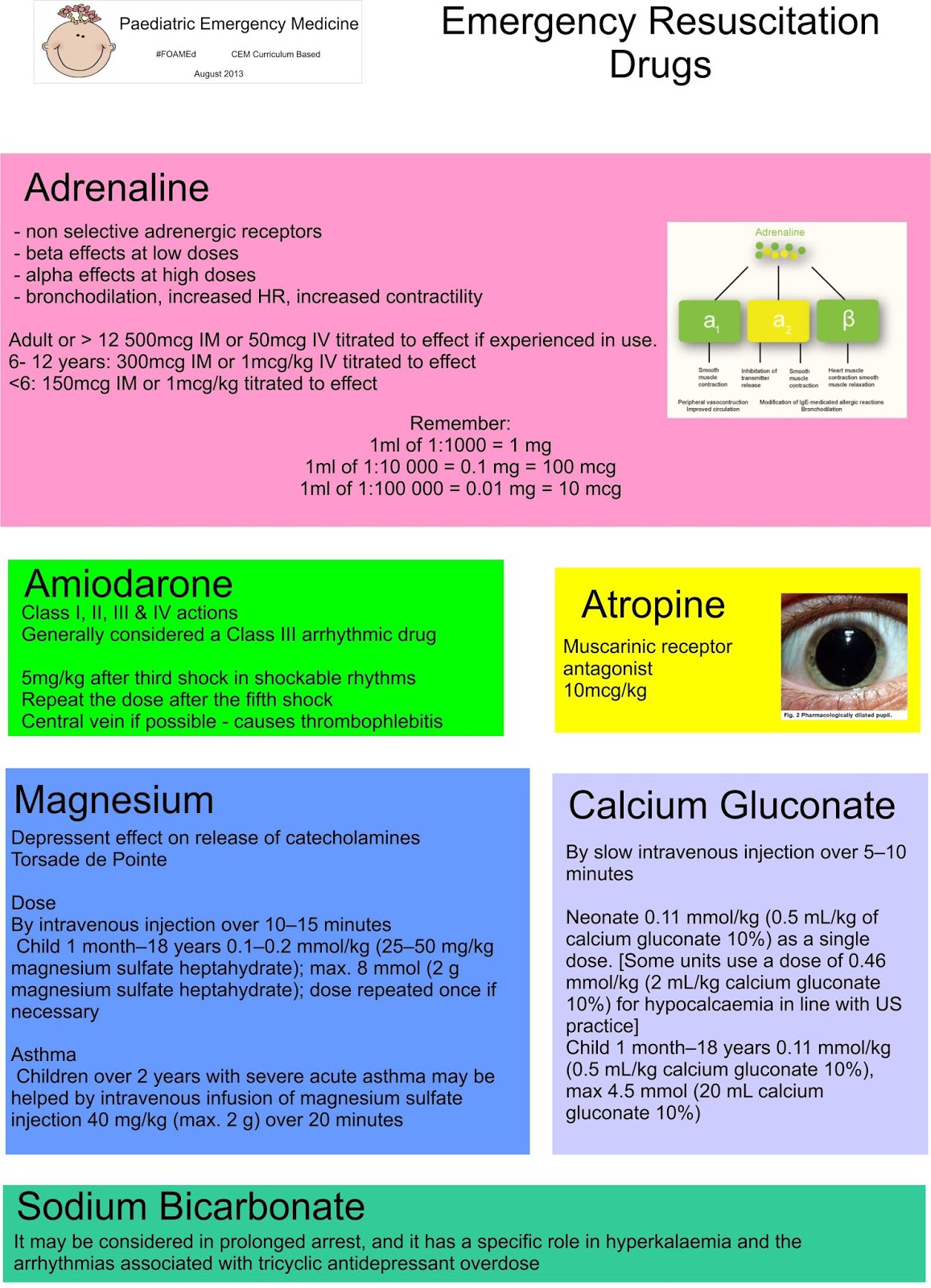
For more blog posts on arrest drugs, please click here.
There are also posts on:
Venous Access
SIDS
Drowning
Subscribe to:
Posts (Atom)